
The Best Asset Protection Attorney: How to Choose
There is no single best asset protection attorney - but there are objective markers that separate real counsel from marketing companies. What to look for.
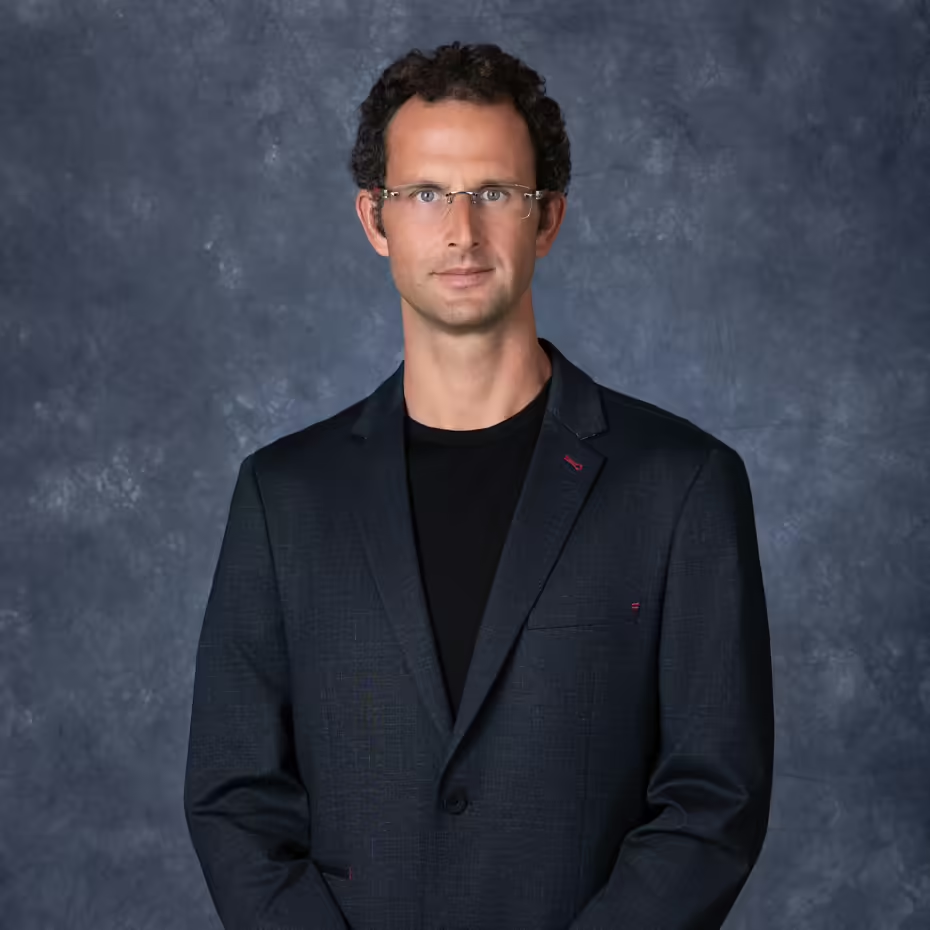 Blake Harris · Florida Bar #86486, Colorado Bar #45942Updated July 20, 2026
There is no single "best" asset protection attorney — anyone claiming the title outright is telling you something about their marketing, not their lawyering. What exists is the right attorney for your situation, and a short list of objective markers that reliably separate serious asset protection counsel from the promoters and marketing companies crowding the search results.
This guide covers where the field came from, what those markers are, the questions to ask any provider — including us — and what hiring the right attorney should cost and feel like.
Why "The Best" Is So Hard to Name
Asset protection attorneys rarely make headlines, and that is a feature of the field, not a gap. The greatest wins are the fights that never happen: a creditor's lawyer studies the structure, prices out litigating in a foreign jurisdiction under a hostile burden of proof, and advises settling for cents on the dollar. Those outcomes end in confidential agreements, not published opinions.
So the usual signals people use to find "the best" lawyer — famous verdicts, press coverage — barely exist here. What you can verify instead: licensure, focus, track record with the specific structure you need, transparency about people and pricing, and how the attorney behaves in a first consultation.
The Father of the Field: Barry Engel
If the discipline has a founder, it is Barry Engel. A Colorado attorney who built his Denver firm, Engel & Reiman, into the early authority on protective planning, Engel did something no marketing claim can match: in 1989 he helped draft the landmark amendments to the Cook Islands International Trusts Act 1984 — the world's first purpose-built asset protection statute.
That statute established the features that still define serious offshore planning: non-recognition of foreign judgments, a beyond-a-reasonable-doubt burden on creditors, and short limitation periods on fraudulent-transfer claims. It made the Cook Islands the benchmark jurisdiction, and it became the model other offshore centers copied. Engel's firm was acquired in 2016, and he passed away the following year — but every credible asset protection practice today works in the framework he helped create.
The takeaway for choosing counsel: the center of gravity in this field is offshore trust law. An attorney's fluency with the Cook Islands framework is a fair proxy for depth.
The Markers That Actually Separate Attorneys
Licensed, named, and verifiable. Your plan should be built by attorneys whose names and bar numbers are published — and checkable in the state bar's own directory. At Blake Harris Law that means, for example, Blake Harris (Florida Bar #86486, Colorado Bar #45942); every attorney on the team page is listed the same way. Watch for providers that create the impression of a law firm — "attorneys on staff" is not the same as you having an attorney.
Privilege and fiduciary duty. In asset protection, a creditor may one day litigate your intent and timing. Communications with your attorney are privileged; communications with a marketing company are discoverable. A non-attorney promoter also generally cannot provide individualized legal advice — only general information — no matter how polished the sales process.
A focused practice. This is a narrow, unforgiving corner of the law where the difference between a structure that holds and one that unwinds is drafting detail and timing judgment. Ask what share of the practice is asset protection, and how often they establish the specific structure you need. Blake Harris Law practices offshore asset protection exclusively.
A named trustee. In offshore planning, the trustee is the licensed company that will legally hold your assets — the most important name on the paperwork. You should know that name, and be able to verify its license with the Cook Islands Financial Supervisory Commission, before you pay. See how to choose a Cook Islands trustee.
Published, complete pricing. Serious firms tell you the whole lifetime cost — setup, annual maintenance, and the CPA filings the structure requires. Our pricing is public. A low headline fee that goes quiet about years two through ten is a structure that will be abandoned, not maintained.
Straight answers, including "no." A good consultation should assess whether you need the structure at all — and tell you plainly if you do not. High-pressure urgency is a promoter's tool, not an attorney's.
Five Questions to Ask Any Provider (Including Us)
- Are you licensed attorneys — and will I have an attorney-client relationship in writing?
- What happens after the trust is established? Ongoing counsel and compliance, or a handoff to a registered agent?
- Who will my trustee be, and how do I verify their license before I commit?
- Is this a focused practice or a product catalog? Depth in one structure beats a menu of twenty.
- What is the total cost of ownership — setup, annual, and tax filings — in writing?
The answers sort the field quickly. Attorneys with real practices answer all five without flinching.
Do You Need a Local Attorney?
For offshore asset protection, generally no. The work is not courtroom work in your county — it is structure design, offshore trustee coordination, and federal reporting, all handled remotely. Clients across all fifty states set up Cook Islands structures without ever visiting an office (or the Cook Islands). The full explanation: do you need a local attorney for a Cook Islands Trust?
Where local counsel does matter is state-specific work layered under the plan — homestead planning, state exemptions, or domestic entities in your home state — and a good asset protection attorney coordinates with those advisors rather than replacing them.
The Bottom Line
You cannot Google your way to a ranking of asset protection attorneys, because the field's best work never becomes public. But you can verify everything that matters in an afternoon: bar numbers in the state directory, a practice focused on the structure you need, a trustee named up front, pricing published, and a consultation that treats "no" as an acceptable answer.
Run that checklist against anyone — including Blake Harris Law. We publish our attorneys, our trustee relationships, and our fees for exactly that reason.
Frequently asked