
Cook Islands Trust Cost Breakdown: Setup, Annual Fees
The first question most people ask after learning about Cook Islands Trusts is: what does it cost?
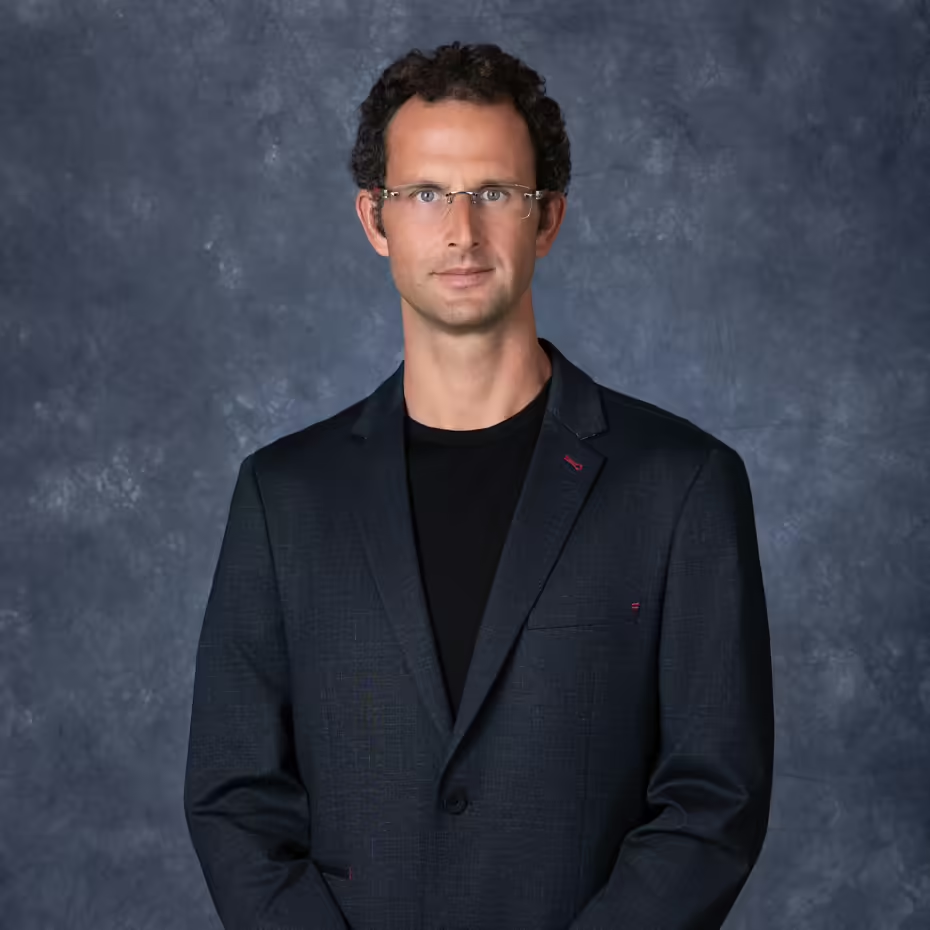 Attorney Blake Harris· Florida Bar #86486, Colorado Bar #45942
How much does a Cook Islands Trust cost?
A Cook Islands Trust typically costs $25,000–$35,000 to set up and $7,000–$10,000 per year to administer. The setup fee covers attorney drafting, Cook Islands trustee onboarding, entity formation, and asset-transfer documentation; the annual fee covers Cook Islands trustee services, U.S. tax-reporting coordination, and recordkeeping. Blake Harris Law publishes flat-fee pricing - no hourly billing.
Introduction
The first question most people ask after learning about Cook Islands Trusts is: what does it cost?
It is a fair question - and one that deserves a straight answer rather than a vague "it depends." This article breaks down the actual cost of setting up and maintaining a Cook Islands Trust through Blake Harris Law: what you pay, who you pay it to, and what you are getting for the money.
At Blake Harris Law, the engagement fee is $25,000. The annual fee is $7,000. Both figures are fixed and transparent - no surprises.
The Two Cost Categories
Cook Islands Trust costs fall into two buckets:
- One-time engagement fee - paid when the trust is created and funded
- Annual fee - paid every year to keep the trust running and compliant
Both matter. Some advisors quote only the setup fee and bury the annual costs. Here is exactly how both break down.
The Engagement Fee: $25,000
The $25,000 engagement fee covers everything required to establish a properly structured, fully documented, and funded Cook Islands Trust. It is an all-in number - not a base price subject to add-ons.
The fee covers:
Blake Harris Law legal fees - trust deed drafting, structure advice, fraudulent transfer timing analysis, coordination with the trustee, and U.S. tax reporting setup. Blake is a licensed U.S. attorney with direct experience in Cook Islands trust formation and co-founder of Atlas Trust Company.
Atlas Trust Company establishment fee - Atlas Trust Company is a licensed Cook Islands trustee. The establishment fee covers their KYC/AML due diligence on the settlor, review and acceptance of the trust deed, and formal acceptance of the trusteeship.
Blake Harris's co-founder relationship with Atlas means the U.S. attorney and Cook Islands trustee operate from a shared understanding of the structure, with established communication protocols that matter most in an emergency.
Trust protector fee - Every Blake Harris Law Cook Islands Trust includes a designated protector. The protector provides oversight of the trustee, can replace the trustee if necessary, and serves as an independent check on the trust's administration.
Working with Blake Harris Law means your U.S. attorney and your Cook Islands trustee have a direct institutional relationship. That coordination is not a convenience - it is a structural advantage that most independently assembled arrangements do not have.
The Annual Fee: $7,000
The $7,000 annual fee generally covers the ongoing maintenance required to keep a Cook Islands Trust operative, compliant, and ready to perform. It breaks down as follows:
Atlas Trust Company ($5,000/year) - Annual trustee administration: maintaining trust records, filing required Cook Islands regulatory reports, managing trust assets per the Letter of Wishes, and being available to act immediately if a creditor event triggers the duress clause.
Blake Harris Law ($1,500/year) - Ongoing legal oversight: annual trust review, updating the Letter of Wishes as needed, advising on asset changes, and being available to respond to any legal developments that touch the trust.
Protector ($500/year) - The protector's annual fee for oversight services.
Note: The $7,000 annual fee does not include U.S. tax reporting (Form 3520, Form 3520-A, FBAR, Form 8938). Those filings are handled by your CPA. Budget approximately $2,000–$4,000 per year for that work.
What You Are Getting for These Numbers
Transparent, Fixed Pricing
No hourly billing surprises. No add-on fees for routine trust administration. The engagement fee and annual fee cover what they say they cover.
An Established Attorney-Trustee Relationship
Most Cook Islands Trust arrangements involve a U.S. attorney on one side and a Cook Islands trustee they have limited direct experience with on the other. Blake Harris Law's co-founder relationship with Atlas Trust Company means both parties are working from the same foundation. That matters in a crisis.
A Trust Deed Built to Hold
The trust deed is drafted to withstand legal attack - with a properly constructed duress clause, appropriate distribution standards, and protector provisions that provide genuine oversight.
A Protector From Day One
Many lower-cost arrangements omit the protector or treat it as optional. Blake Harris Law includes it as standard. The protector is the mechanism through which you can replace the trustee if something goes wrong - it is not optional in a properly structured trust.
How This Compares to the Market
The market for Cook Islands Trust services is not standardized. Prices vary significantly, and low prices often signal corner-cutting on structure quality, trustee selection, or ongoing oversight.
Blake Harris Law's pricing sits within normal market range for a properly structured Cook Islands Trust, with the advantage of fixed, predictable fees and an established trustee relationship built into the engagement.
The Return on Investment Question
The median jury verdict in a U.S. medical malpractice case exceeds $500,000. Business litigation judgments routinely reach seven figures.
A client paying $7,000 per year protecting $2 million in liquid assets is spending 0.35% of protected assets annually. That is less than most investment management fees - and it addresses risks that investment management does nothing about.
The structure typically makes financial sense at $750,000 or more in liquid assets at risk, with $1 million being the conventional practical entry point.
What the Annual Fee Does Not Cover
U.S. tax reporting (CPA fees). Forms 3520, 3520-A, FBAR, and Form 8938 are prepared by your CPA. Budget $2,000–$4,000 per year.
Creditor defense legal fees. If a creditor challenges the trust, Cook Islands counsel fees and additional U.S. attorney time are event-driven costs not included in the annual retainer. Most creditors settle rather than litigate once they understand what attacking a Cook Islands Trust requires.
Significant structural changes. Major trust amendments or addition of new offshore entities may carry additional fees depending on complexity.
Summary
For clients with significant exposed assets, this is a known, fixed cost for a legal structure that has been tested under real-world creditor attack and held.
Frequently asked
Frequently asked questions
No. Blake Harris Law charges a fixed engagement fee that covers the full scope of setup work.
Atlas Trust Company holds legal title to the trust assets as the licensed Cook Islands trustee. Under normal conditions they follow the settlor's Letter of Wishes. In a creditor emergency, they exercise independent discretionary control under Cook Islands law. Their license is issued by the Cook Islands Financial Supervisory Commission.
Yes - and you should be skeptical of them. Very low setup costs typically mean a template trust deed, a less experienced attorney, a less established trustee, or some combination. For a structure you are relying on to hold under legal attack, cutting corners on quality is not a sound approach.
No legal minimum, but the economics of the $7,000 annual fee plus CPA costs make the structure most cost-effective at $750,000 or more in liquid assets at risk.
Legal fees related to personal asset protection planning are generally not deductible. Fees with a business purpose may have a deductible component. Discuss with your CPA.
Costs increase. Cook Islands counsel fees for defending a trust attack can run $50,000–$200,000 or more. This is one reason creditors typically prefer to negotiate - the cost of attacking a properly structured Cook Islands Trust is prohibitive for most plaintiffs.
← All articleshttps://blakeharrislaw.com/articles/cook-islands-trust-cost-breakdown